The 133-line scroll — the longest Greek papyrus ever found in the Judean Desert — was recently translated and contains prosecutors' notes about a criminal trial before Roman officials.
After studying the scroll , a team of faculty member was able-bodied to watch that the 133 - furrow document contained notes about a criminal trial that take up place around 131 C.E. The gyre is not only the farsighted Greek Cyperus papyrus discover in the Judean desert , but it also carry details about the best - documented test from Roman Catholic times — aside from that of Jesus Christ .
Rediscovering The Mislabeled Greek Papyrus
The papers was written in Greek because Greek became the administrative words of the region when it was appropriate by Alexander the Great in the fourth century B.C.E. When the Romans came in the first 100 B.C.E. , they preserved it . But translating it was no sluttish labor .
“ It is a tenacious and difficult papyrus and more interesting than any of the others I have release or read , ” Cotton Paltiel toldAll That ’s Interestingin an e-mail . “ It is not strictly a legal contract , with the insistent formulae you witness in all of them ; nor is it part of an archive , like the Babatha Papyri or those of Salome Komaise . [ O]ne had to read it without birth any ready clues ! ”
Working with an outside squad from the Austrian Academy of Sciences , the University of Vienna , and Hebrew University , she and the others determined that the papers check prosecutor ’ tone for a trial that took place before Romanic officials in the second 100 C.E.

Shai Halevi, Courtesy of the Leon Levy Dead Sea Scrolls Digital Library, Israel Antiquities AuthorityAt 133 lines, the scroll is the longest Greek papyrus ever found in the Judean Desert, though several large chunks are missing.
The test had two Jewish defendants , Gadalias and Saulos , and it occurred during a crucial peak between two Judaic rebellions , the Jewish Diaspora revolt ( 115 to 117 C.E. ) and the Bar Kokhba revolt ( 132 to 136 C.E. ) .
A Fascinating Tale Of Tax Evasion, Fraud, And Rebellion
As detail in a study publishedin the journalTyche , the Egyptian paper reed was compose on the eve of Gadalias and Saulos ’ trial before Roman officials . Written by the Roman prosecuting attorney , the 133 - line papers is full of details about grounds and strategy .
So , who were Gadalias and Saulos ? The two Jewish suspect were accuse of multiple crimes , include forge document and diddle the Roman Catholic tax self-assurance by sell slaves under the table ( or maybe just setting them liberal ) . Gadalias , the Word of a notary public with a foresightful felonious chronicle of his own , apparently helped Saulos execute the law-breaking .
The two men were also accused of rebellious activities at a time when rebellion were increasingly putting the area on sharpness . Their trial likely take up place sometime between 129 and 131 C.E. , after the Jewish Diaspora revolt and just before the Bar Kokhba revolt .

Shai Halevi, Courtesy of the Leon Levy Dead Sea Scrolls Digital Library, Israel Antiquities AuthorityA close-up view of the papyrus, which was written in the administrative language of the time: Greek.
As the researcher found , thepapyrusimplies that Gadalias and Saulos were involve in ill-affected activities during Emperor Hadrian ’s sojourn to the realm .
Giovanni Dall’Orto / Wikimedia CommonsResearchers were able to date the papyrus because it mention the Roman emperor moth Hadrian , who visited the region between 129 and 130 C.E.
Whether or not Gadalias and Saulos were involved in the rebellion , it ’s potential that the Bar Kokhba insurrection interrupted their trial . Indeed , researchers suspect that the papyrus was bear on because it was take to a hideout cave by a refugee during the insurrection — possibly by one of the prosecuting officer ’ scribes — where it was preserved after its owner conk .

Shai Halevi, Courtesy of the Leon Levy Dead Sea Scrolls Digital Library, Israel Antiquities AuthorityAn infrared image of the papyrus.
“ Like almost all the other papyri from Israel , it was preserved in antiquity in the cave of the Judean Desert , ” Cotton Paltiel toldAll That ’s Interesting . “ The dry climate save them all ! ”
“ This Cyperus papyrus is extraordinary because it provides direct insight into test preparedness in this part of the Roman Empire , ” Dolganov remarked . subject author Avner Ecker of Hebrew University added : “ This is the well - document Roman court of justice case from Iudaea aside from the visitation of Jesus . ”
After read about the ancient papyrus detail a criminal test in Israel , go inside the complicated story ofwhy the Roman Empire collapse . Or , find out aboutthe subtle localization of Golgotha , the place where Jesus Christ was purportedly crucified .
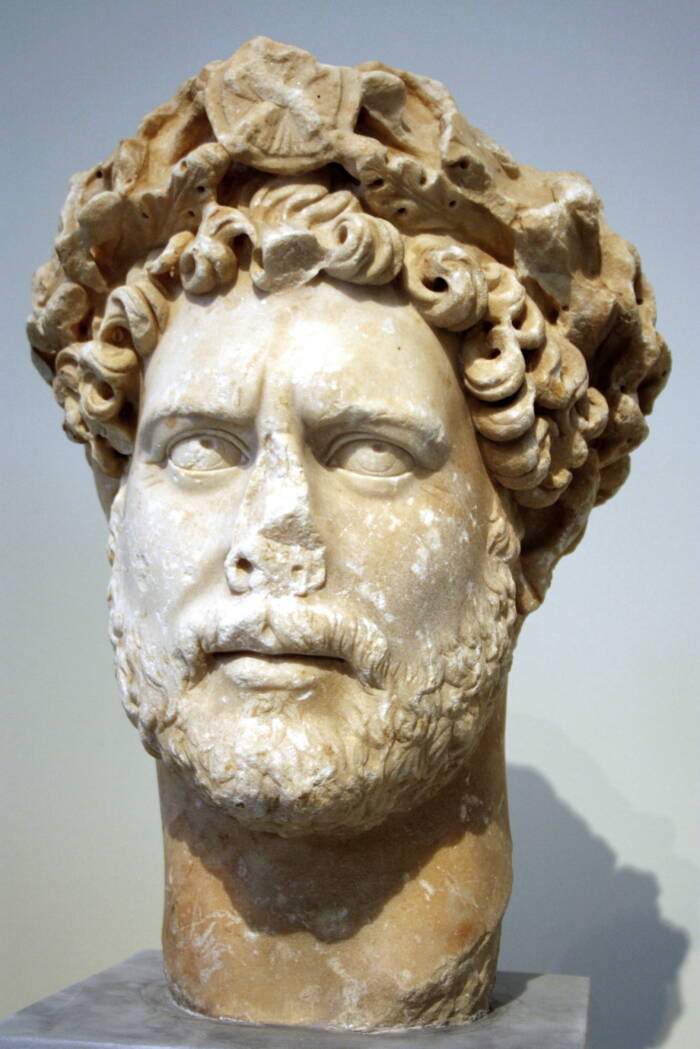
Giovanni Dall’Orto/Wikimedia CommonsResearchers were able to date the papyrus because it mentions the Roman emperor Hadrian, who visited the region between 129 and 130 C.E.
