Though the fossils suggest that animal life started 300 million years earlier than previously thought, not everyone is convinced.
Elizabeth Turner / Laurentian UniversityA end - up of the fogey ’s texture .
In the 1990s , geologist Elizabeth Turner fly to Canada ’s isolated Mackenzie Mountains to take sample distribution for her Ph.D. One of the sample mint her as odd , but she put it aside for later . Now , Turner believes that that sample distribution might be grounds that animal life began century of millions of days earlier than previously thought .
“ Just a handful of sample , literally a handful , had this out of the blue weird , complicated thing in it that say , ‘ I really do n’t go here,'”Turner recalled .
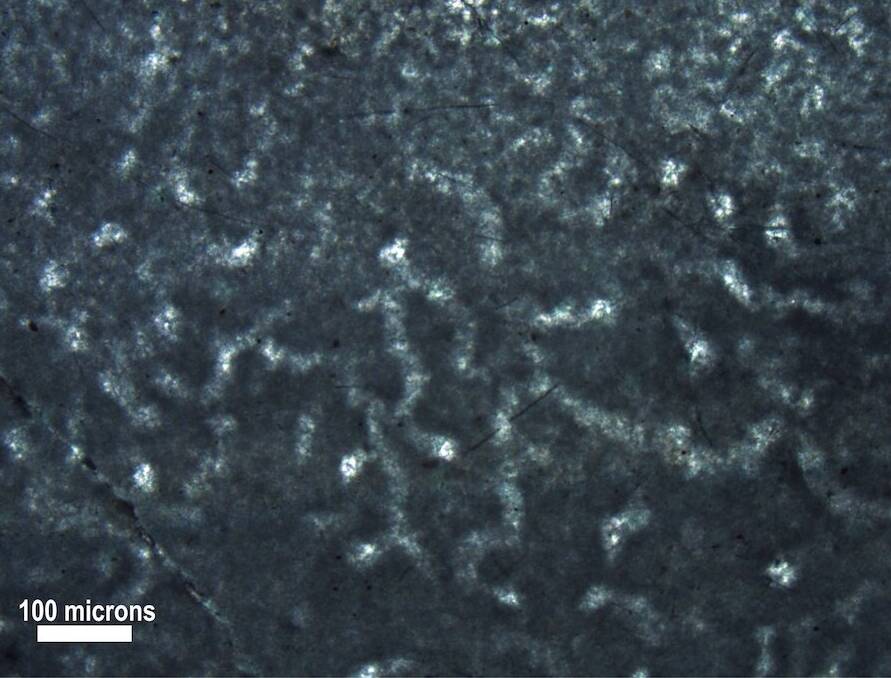
Elizabeth Turner/Laurentian UniversityA close-up of the fossil’s texture.
That sample — an ultrathin piece that once belong to a prehistorical reef — strike Turner as too complicated to be microbic structures . Today , she believe that they ’re really fossils of sponges .
And if they are sponges , then Turner ’s fossil suggest that animal life begin 890 million years ago . That ’s huge . In the farsighted and enduring quest to understand the parturition of brute living on Earth , scientists have previously guessed that it begin some 500 million years ago .
“ ab initio , when you bet at these features they look like a crowd of wiggles , but when you seek to follow each of the strand , you realize that even in slight section they organise complicated 3D meshwork,”Turner explained .
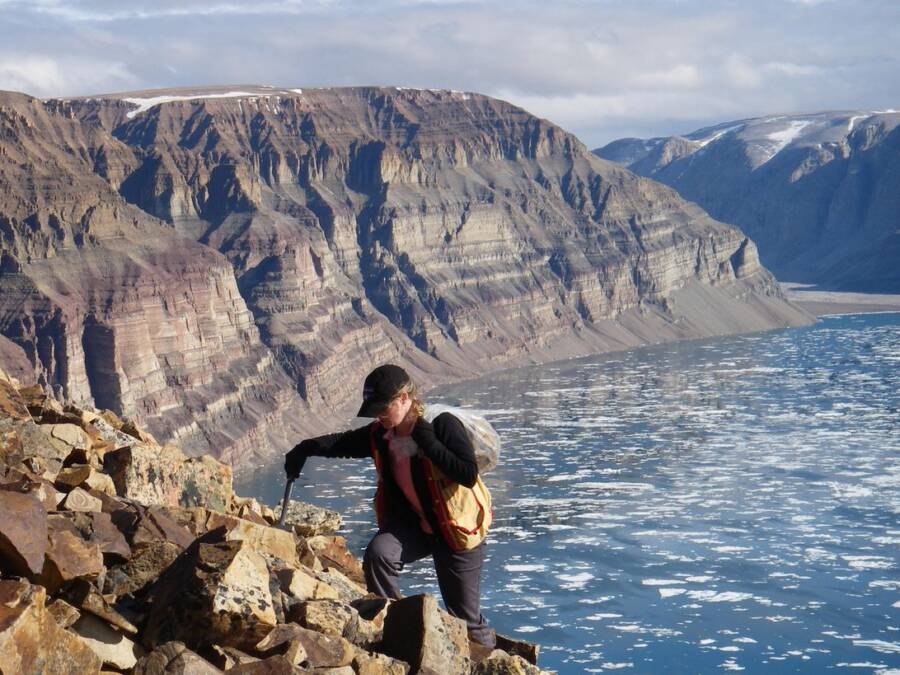
C. GilbertGeologist Elizabeth Turner at work.
C. GilbertGeologist Elizabeth Turner at work .
Those meshworks bear a unassailable resemblance to sponge fossils . Turner trust that her sample distribution looks monovular to evidence presented ina late study , which seek to explain how fogey form from ruttish sponges .
“ They are in truth identical to the ones that I had in my much older rocks , ” Turner say of that study . “ There were n’t any other truly viable interpretation of the cloth . ”
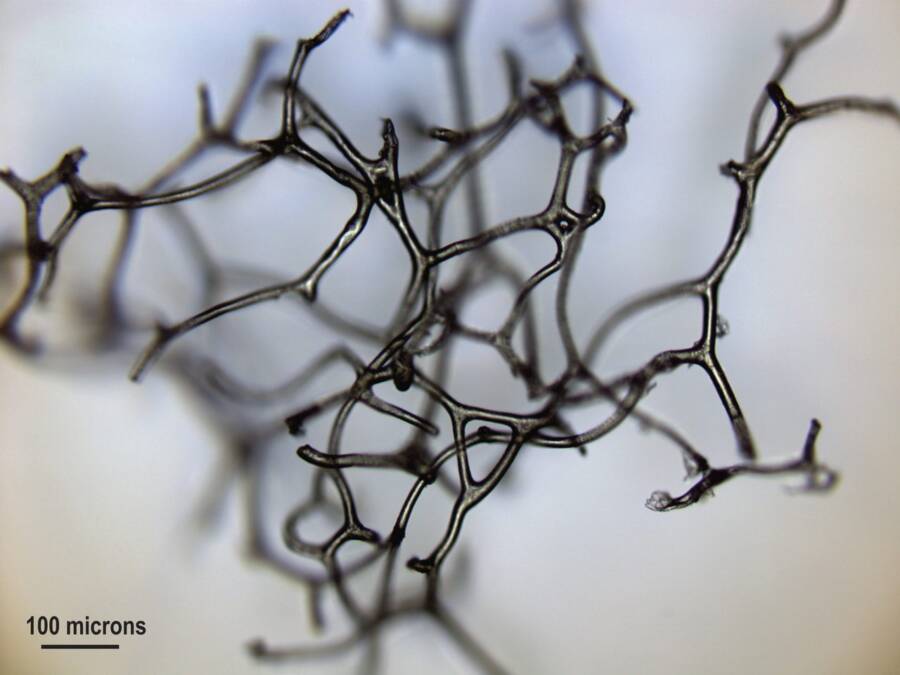
Elizabeth Turner/Laurentian UniversityThe skeleton of a modern day keratose sponge, which bears some resemblance to what Turner found.
However , not everyone is convert that Turner is right about what she found — and even Turner admits it ’s hard to be certain .
“ Maybe there is some other account . My rendering is not the last word,”Turner acknowledged . “ It ’s possible that I ’m haywire . ”
Indeed , multiple scientist gather Turner ’s title with skepticism . First of all , Earth ’s atomic number 8 levels may not have been rich enough to support living 890 million years ago — though quick study may have survived by live in reef .
But second of all , her discovery — if precise — would completely rewrite what scientists understand about the arc of Earth ’s history .
“ We ’re talking about inserting hundreds of gazillion of years without a trace ” of fossils , noted Graham Budd , a paleobiologist at Uppsala University in Sweden .
“ It would be sensational . It would be like finding a electronic computer Saratoga chip in a fourteenth - century monastery . ”
Turner push back on incredulity like Budd ’s , arguing that scientists simply do n’t sleep together yet what go on trillion of years ago .
“ We eff there has to have been a time , an episode or an separation of hidden phylogeny in fauna prior to 540 million year ago,”Turner say . “ The inquiry is – how far back did it go , and what was it like ? That ’s the large hole . ”
But Jonathan Antcliffe , a fossilist at the University of Lausanne in Switzerland , also has his doubts , cry Turner ’s grounds “ very , very thin . ”
“ These matter could be utterly anything , ” Antcliffe said . “ There ’s just nothing typical here at all . ” He belong on to say that Turner had found “ some wiggles in a rock , performed a Rorschach inkblot test on them , and said , ‘ They sort of mistily remind me of a sponge . ”
Elizabeth Turner / Laurentian UniversityThe skeleton of a modernistic day keratose sponge , which bears some resemblance to what Turner find .
However , other scientists trust that Turner ’s discovery holds urine .
“ The orderliness and spruceness of this traffic pattern , I think , is very classifiable , ” said Joachim Reitner , a German paleontologist who co - wrote the work cited by Turner on horny sponge .
“ If I notice that pattern in younger rock , I would say for sure that it was a sponge . ”
For now , scientists have enough more work to do to understand the early days of Planet Earth .
“ This is not the holy grail , ” Turner said of her discovery . “ It ’s just a step toward a good view on animal organic evolution . ”
And , go ahead , she believes that scientists just involve to keep asking questions .
“ We ’re able of wondering about stuff , and we question how we came to be , ” Turner said . “ What happened before , and what was it like ? How did it begin ?
“ This is really digging into that . I ’m shake up the apple cart . ”
After reading about the spongelike fossils that may be the world ’s oldest , learn aboutMary Anning , the prolific but for the most part forget fossil hunter of the 19th century . Or , disclose the chronicle ofMing the one dollar bill , the world ’s old animal who was pop by the scientists canvass it .
