These 65 graves mostly date from the fifth and sixth centuries C.E., the period of the mythical King Arthur — and one of these graves may actually be his.
Wikimedia CommonsRuins in Tintagel in Cornwall , England , where some of the purple Robert Graves have been identified .
Archaeologists have long grappled with a historical enigma : the strange absence of British kings ’ graves from post - Roman Britain . Now , fresh inquiry suggests that up to 65 regal graves from the 5th and sixth centuries have been hide in homely sight , largely unadorned and tucked within regular memorial park .
“ Before this work , we were completely incognizant of the declamatory number of probable royal Robert Graves surviving from post - Roman Catholic western Britain , ” Professor Ken Dark of the University of Reading and Spain ’s University of Navarra , whose field of study on the Robert Ranke Graves was release in theJournal of the Royal Society of Antiquaries of Ireland , told theIndependent .
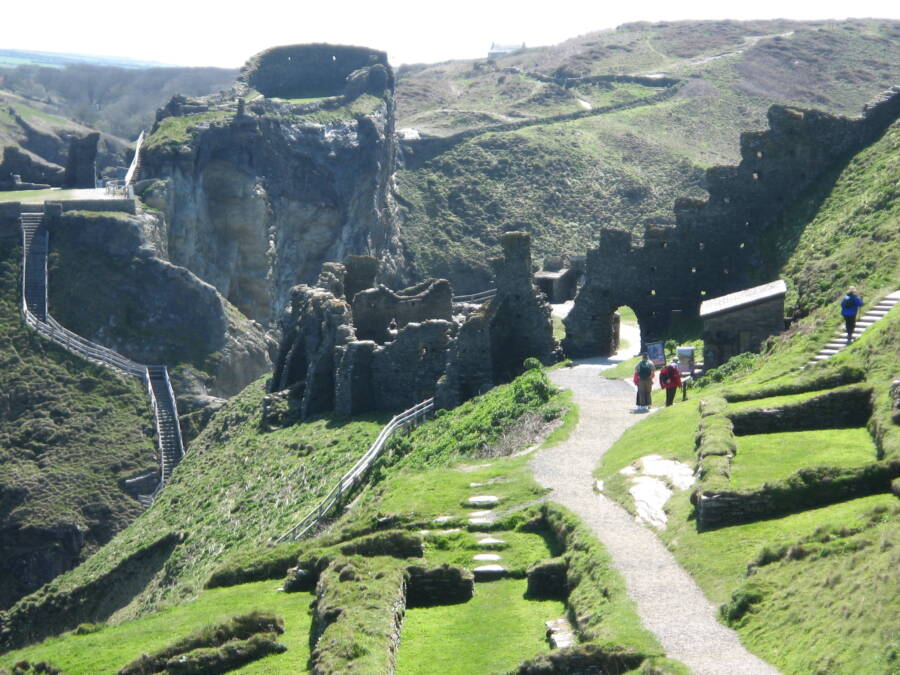
Wikimedia CommonsRuins in Tintagel in Cornwall, England, where some of the royal graves have been identified.
He tote up , “ Ongoing investigations are likely to serve transfer our understanding of important aspects of this important time period of British account . ”
Dark examine about 20 burial sites in the Rebecca West and due north of England and Wales , where British Celtic kingdoms flourished following the retreat of the Romans in 410 A.D. In Wales , Cornwall , Devon , and Somerset , he comment subtle but significant differences in a small fraction of the graves .
“ We ’ve got a load of burials that are all the same , and a tiny minority of those burials are cross out out as being of higher status than the others , ” Dark explained toLive Science .
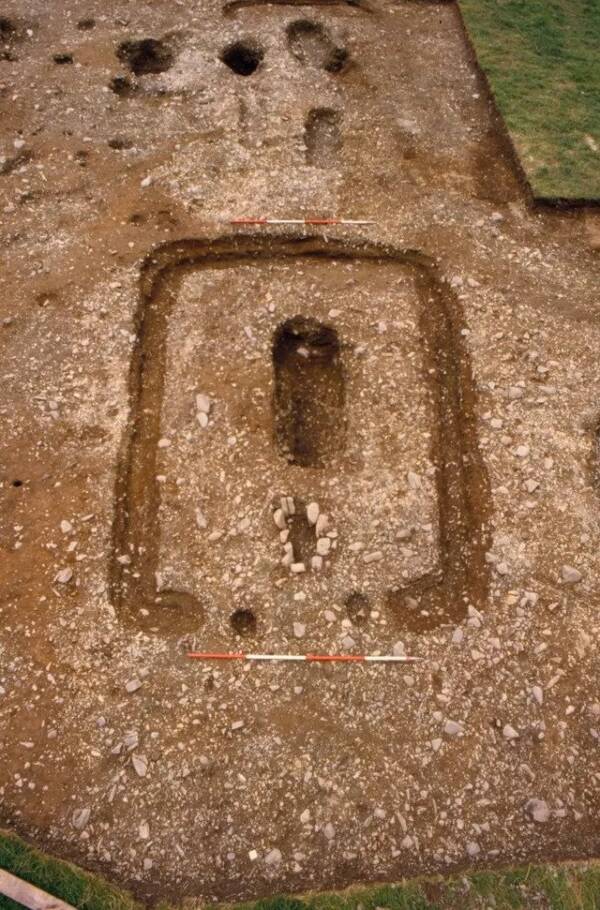
Ken Murphy/Dyfed Archaeological TrustAn example of an enclosed grave which might have belonged to a British royal at Plas Gogerddan, Wales.
“ When there are no other possible candidates , that seems to me to be a pretty good line of reasoning for these being the ‘ turn a loss ’ royal burials . ”
Unlike the absolute majority of burials , these graves are encircled by orthogonal or straightforward ditches and appear to have once had William Henry Gates , causeway , and fence . They also bear evidence of timber mail and stone - draw Hell . To survive Science , Dark noted that the practice of enclosing Stephanie Graf “ comes straight out of late papistical burial drill . ”
ToBBC , Dark explain : “ We know that the master political rank in those guild among those masses was royal house so if we see some burials stand up out in this way , it ’s potential that they are the burials of kings . ”
Ken Murphy / Dyfed Archaeological TrustAn example of an enclosed grave which might have go to a British royal stag at Plas Gogerddan , Wales .
Yet these graves have pass away unnoticed for 100 . In fact , just one grave belonging to a British Martin Luther King Jr. — Catamanus or Cadfan in Welsh — has been previously discovered . Catamanus ’ grave was marked with a gemstone name him as “ rex ” or “ Rex , ” though Dark notes that Catamanus became a monk follow his kingship , which is perhaps why he was call back in such a fashion .
Anglo - Saxons , who ’d settled in Britain after infest the island , often pay their tycoon detailed burials and filled their Robert Ranke Graves with gift . That makes these graves easier to identify — and , indeed , nine have been recover to date .
But the indigenous British , Dark mark , might have seen this as a “ pagan ” practice . They would have considered it unacceptable and un - Christian to immerse kings with such rich . Instead , their royal family would have had round-eyed , undecorated graves in cemetery alongside common Christians .
Dark is not the first to take note the difference between these graves . Other archeologist had proposed previously that they belonged to citizenry of mellow condition . To survive Science , however , Dark explained , “ But I ’m suggesting that this burial practice was specifically purple . ”
Yet there remain much to watch about the royal possibly buried in these graves . For now , investigator are n’t even certain about their names or their chronicle . That makes sense , as historian bonk very small about the time that these kings would have be . It ’s also the catamenia during which King Arthur allegedly press the Saxons .
While some historian trust the queen to be fictional , Dark is n’t so certain . After all , he noted , there was an otherwise unaccountable spike in the name Arthur among British and Irish royal in the 6th one C .
“ This is a period of history that we cognize very little about , ” Dark told BBC . “ In fact , it ’s possibly a period of account we recognize least about . ”
Hopefully , future find like Dark ’s will shine more light on the king and queens who lived and died during this little - read era .
After reading about the dozens of likely royal graves identified , look through the fascinatinglineage of the British regal family . Or , go inside the lurid discovery ofdecapitated Roman remains in England .
